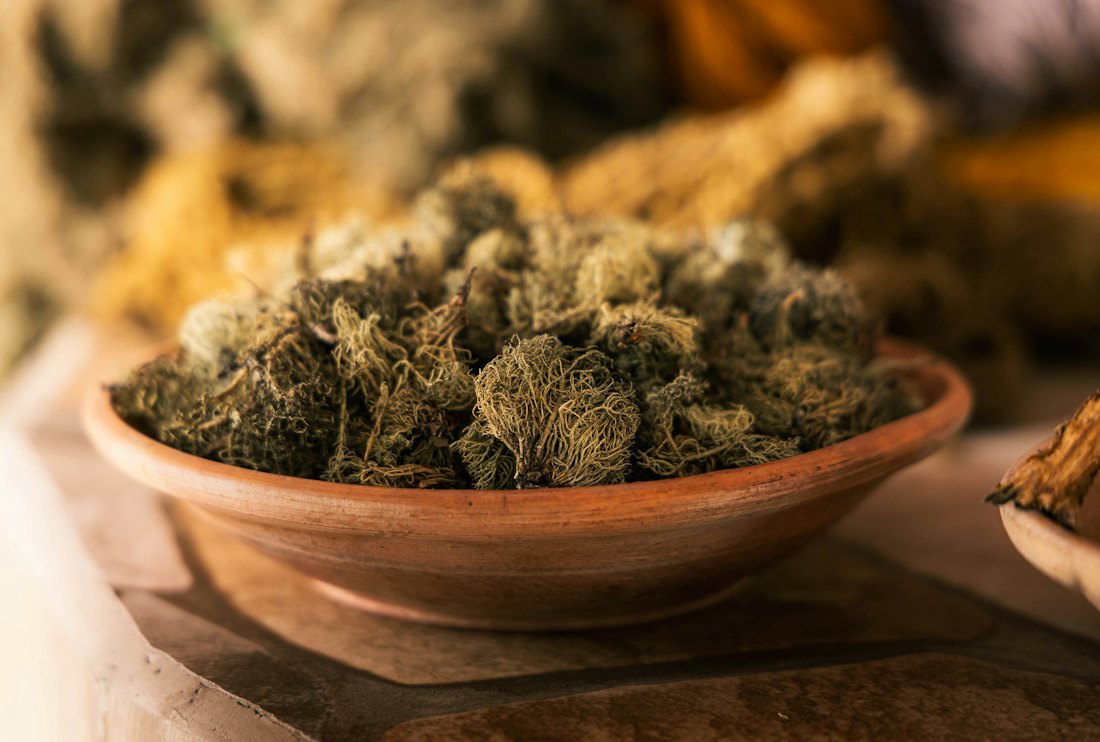
Diploma · Indicative 3 years part-time
Chinese Herbal Medicine & Materia Medica
中药学 · Zhōngyào xué
- Level
- Diploma
- Duration
- Indicative 3 years part-time
- Intakes
- September intake (indicative)
- Study mode
- On campus
- Online theory with on-campus herb identification days
Overview
About this programme
Chinese herbal medicine is a prescribing tradition. A practitioner is expected to know several hundred individual substances — their properties, channel entry, actions, dosages, and the circumstances in which they must not be used — and then to understand how those substances are combined and modified in formulae.
This programme treats materia medica as the heart of the discipline. You study herbs in functional categories rather than alphabetically, because that is how they are actually reasoned about in the clinic. From there you move to classical formulae, to the logic of modification, and to the practical questions of sourcing, quality, identification and dispensing.
Safe practice runs through the whole programme rather than sitting in a single lecture: interactions with conventional medicines, substances with known toxicity, restricted and endangered species, and the regulatory environment for herbal supply in the UK.
Fees are available on enquiry. The college publishes fees on request rather than in a table, so that we can explain what each figure covers — tuition, assessment, materials and any clinical costs — and discuss payment by instalments. See Fees & funding or enquire directly.
Who it's for
Is this programme right for you?
- Acupuncturists who want to prescribe as well as needle
- Pharmacists, herbalists and other health professionals moving into Chinese materia medica
- Students who intend to practise as a specialist herbalist
- Importers, dispensers and retailers of Chinese herbs who need genuine product knowledge
Learning outcomes
What you will be able to do
- Describe and classify the principal substances of the Chinese materia medica by category, property, channel entry and action
- Explain the classical construction of a formula, and justify the role of each constituent herb
- Modify a base formula coherently in response to a specific presentation, and explain what you changed and why
- Identify herbs by sight and by smell, and evaluate the quality of a supplied sample
- Recognise substances with known toxicity or narrow therapeutic margins, and the appropriate safeguards for each
- Screen a patient's existing medication for potential interactions before prescribing, and record that screening
- Dispense accurately, and explain safe storage, labelling and patient instruction
- Work within the UK legal framework governing herbal supply, including restricted and endangered species
Curriculum
Programme structure
| Stage | Module | Format | Indicative hours |
|---|---|---|---|
| Year 1 · Materia medica | Properties, flavours and channel entryThe four qi, the five flavours, ascending and descending, channel entry, and how these properties predict what a substance does — the reasoning system behind the catalogue. | Online theory + on campus | Indicative [XXX] hours |
| Year 1 · Materia medica | Herbs that release the exterior and clear heatThe first and largest functional categories, studied in depth with fresh and dried samples for identification and quality assessment. | Online theory + herb identification day | Indicative [XXX] hours |
| Year 1 · Materia medica | Herbs that transform phlegm, move qi and invigorate bloodCategories central to clinical practice, including the safety profile of the blood-invigorating herbs, which is where most prescribing errors begin. | Online theory + herb identification day | Indicative [XXX] hours |
| Year 2 · Formulae | Classical formulae and their constructionThe architecture of a formula — chief, deputy, assistant and envoy — taught through a core repertoire of classical formulae and the clinical situations each addresses. | Online theory + on campus | Indicative [XXX] hours |
| Year 2 · Formulae | Modification and clinical prescribingHow to adjust a base formula as a presentation shifts, how to combine formulae, and how to handle the messy, mixed presentations that real patients bring. | On campus, case-based | Indicative [XXX] hours |
| Year 2 · Safety | Toxicology, interactions and pharmacovigilanceSubstances requiring particular care, interaction screening against conventional medication, recognising and reporting adverse reactions, and the evidence around the more contested safety questions. | On campus + online | Indicative [XX] hours |
| Year 3 · Practice | Dispensing, quality and supply chainIdentification of substituted and adulterated material, heavy metal and pesticide testing, sourcing and supplier assurance, and the legal restrictions on protected species. | On campus, practical | Indicative [XX] hours |
| Year 3 · Practice | Herbal clinical practiceSupervised consultations with an emphasis on prescribing decisions, follow-up review, dose adjustment over time, and knowing when herbal treatment is not appropriate. | On campus, supervised | Indicative [XXX] hours |
Admissions
Entry requirements
- Aged 18 or over at the start of the course
- Level 3 study or equivalent, or relevant prior experience in a health or plant-science field
- English proficiency sufficient to study at this level where English is not your first language
- Applicants without a prior acupuncture qualification will be asked to complete the college's diagnostic foundations module alongside Year 1
- An understanding of basic chemistry and biology is helpful but not required
Full details, including how to evidence each requirement and how we handle applications from outside the UK, are on the entry requirements page.
Assessment
How you will be assessed
- Herb identification examination using unlabelled samples
- Written papers on materia medica and formula construction
- A prescribing portfolio of supervised cases with written rationale
- A safety and interactions paper, which must be passed to progress to clinical practice
What you can do afterwards
- Advanced Diploma-level specialist modules
- Combined acupuncture and herbal practice
- Dispensing, teaching or supply-side roles within the sector
Next steps
Applying for this programme
Step 1
Enquire or attend an open day
Ask us anything before you commit. Our open days include programme talks and a visit to the teaching clinic.Step 2
Check the entry requirements
Make sure you can evidence each requirement. If you are unsure about a qualification, ask us before applying — we assess prior experience as well as formal certificates.Step 3
Complete the online application
Applications are made through our online form. You will be asked for your details, your prior study, and a short statement about why you want to study this programme.Step 4
Conversation and offer
Most applicants are invited to a short conversation, in person or online. Offers are made after that, and include the fee schedule and payment options.
Questions
Frequently asked questions
Are Chinese herbal medicines safe?
Herbal medicine has a real safety profile, in both directions: many substances are well tolerated and long used, while some carry genuine risks that must be respected. This programme teaches the risks explicitly — toxicology, interactions, restricted substances and quality assurance — and treats that knowledge as a prescribing prerequisite rather than an optional extra. We make no claims that herbal treatment is risk-free, and we teach students to be honest with patients about uncertainty.
Do I have to be an acupuncturist to take this course?
No, but you will need diagnostic skills to prescribe safely. Applicants without a prior acupuncture qualification take our diagnostic foundations module alongside Year 1 so that everyone reaches the prescribing modules with a shared vocabulary.
Where do the herbs used in teaching come from?
Teaching materials are sourced from established UK suppliers who provide certificates of analysis. Students learn to interrogate that documentation themselves, and to identify substituted or adulterated material by inspection — a skill that only comes from handling real samples.
Related study
You may also be interested in
Acupuncture & Meridians
A structured programme in meridian theory, point location and safe needling practice, taught through demonstration, supervised practice and clinical observation.
View programme
Chinese Diet & Lifestyle Therapy
A practical study of Chinese food therapy and yang sheng — the traditional approach to eating, seasonal adjustment and daily habits — taught as cultural and educational knowledge.
View programme
Enquire
Ask about Chinese Herbal Medicine
Educational content notice
Content on this website describes Chinese medicine as it is taught and practised historically and is provided for educational purposes only. It is not medical advice and is not intended to diagnose, treat or cure any condition. Always consult a qualified healthcare professional about your own health, and never delay or stop conventional treatment because of something you have read here.
Placeholder information
Fees, exact dates, contact hours, module titles and the awarding arrangement for this programme are pending confirmation and are marked as placeholders throughout this site. Nothing on this page should be relied upon as a contractual commitment until the college publishes its validated programme specification.
Ready to apply for Chinese Herbal Medicine?
Applications are open for the next intake. If you would rather talk it through first, we are happy to do that too.